Mexico Logistics Hot Events in October and Their Impact Analysis
This move means that multiple industries originally planned to be involved will temporarily be exempted from the burden of new tariffs. The automotive, textile, steel, toy and other industries will become the direct beneficiaries. Relevant enterprises can take this opportunity to further consolidate and expand their business layout in the Mexican and North American markets. This policy adjustment reflects that, against the backdrop of increasing uncertainties in the current international trade environment, implementing localized production in Mexico or North America has become a key strategic path to address trade barriers and reduce compliance risks.
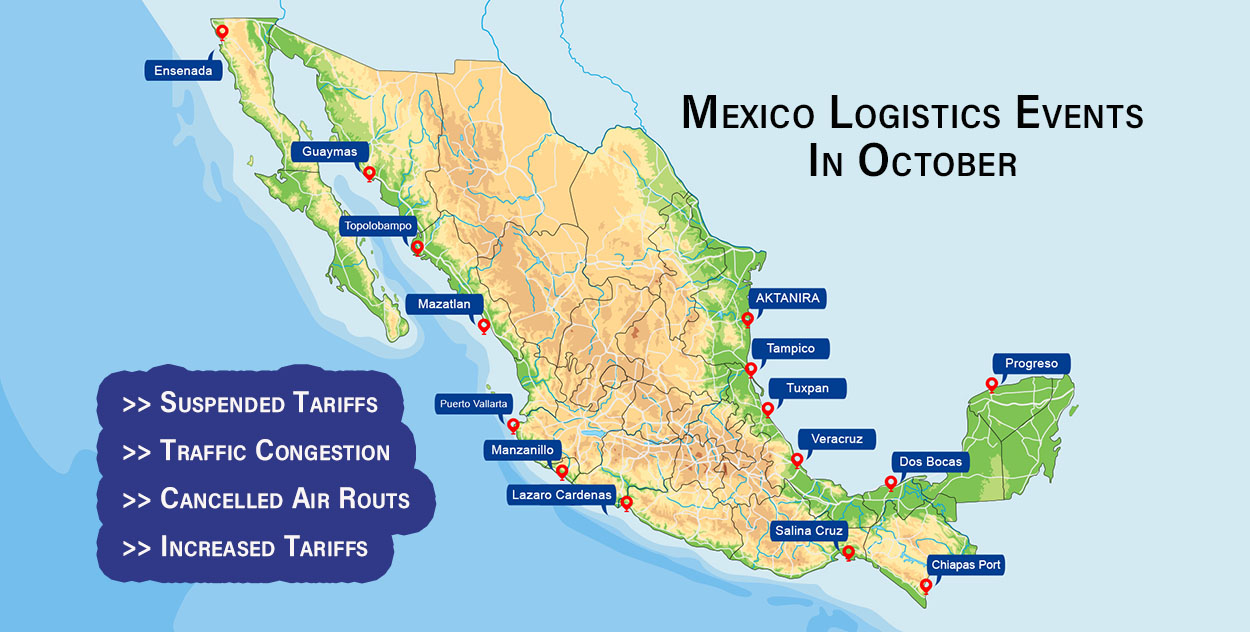
On the evening of October 27th, agricultural workers demonstrators in Mexico blocked several major roads in about 17 states across the country, demanding that the government raise the protective price of corn in the market.
As of the morning of October 28th, some sections of the road have not yet been lifted from lockdown, which has caused severe disruptions to intercity traffic in many areas and a large number of vehicles to be stranded. During this period, some Chinese passengers reported that the buses they were on were trapped for over 10 hours, which affected their travel safety and the efficiency of domestic freight transportation. It may also impact the operation of cross-border supply chains, highlighting the potential impact of social issues on the stability of the transportation and logistics system.
On October 29th, the US Department of Transportation unilaterally announced the cancellation of 13 passenger routes to Mexico and cargo flights to New Felipe Angelis International Airport (AIFA) in the capital.
The decision was implemented without prior consultation, disrupting the existing air transport arrangements. Mexican President Claudia Simbaum explicitly opposed this and pointed out that such measures might trigger bilateral diplomatic tensions. To mitigate the impact, the Mexican government is planning to work with domestic airlines to formulate an emergency response plan to ensure the stability and continuity of air logistics channels.
In addition, according to the latest policy trends, the US plan to impose a 25% tariff on Mexican imports will come into effect on November 1, 2025.
This policy is expected to significantly increase the cost and compliance complexity of cross-border trade, and prompt enterprises to accelerate the reconstruction of regional supply chain layout. Data shows that the recent tariff adjustments implemented by the United States have had a substantial impact on the industrial chain: semiconductor products are facing 100% import tariffs, steel and aluminum products at 50%, and automotive products at 25%. The above measures have led to a year-on-year decline of more than 30% in General Motors' profits, and Stellantis Group has also reported an operating loss of several million dollars.
Analysis indicates that as the United States-Mexico-Canada Agreement (USMCA) enters the review stage, the implementation standards of future rules of origin and customs inspection procedures may become even stricter, thereby posing higher requirements for regional supply chain compliance management.
Is the US-Mexico Cross-Border Transportation Market Booming
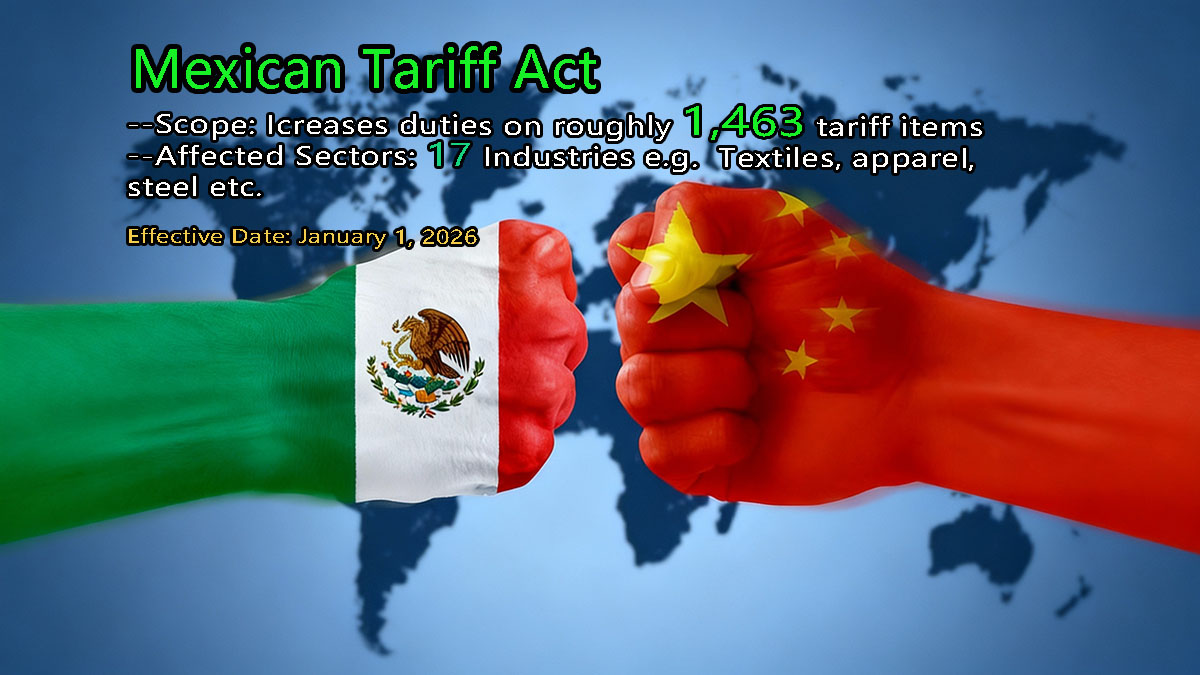
Mexico suspended tariff increase on 1371 Chinese products
Related blog