Mexico's Customs Clearance Policy Update and Response Strategies in 2025

Overview of Key Policy Updates
1. Abolition of the Tax-Exemption Threshold and Standardization of Tax Collection
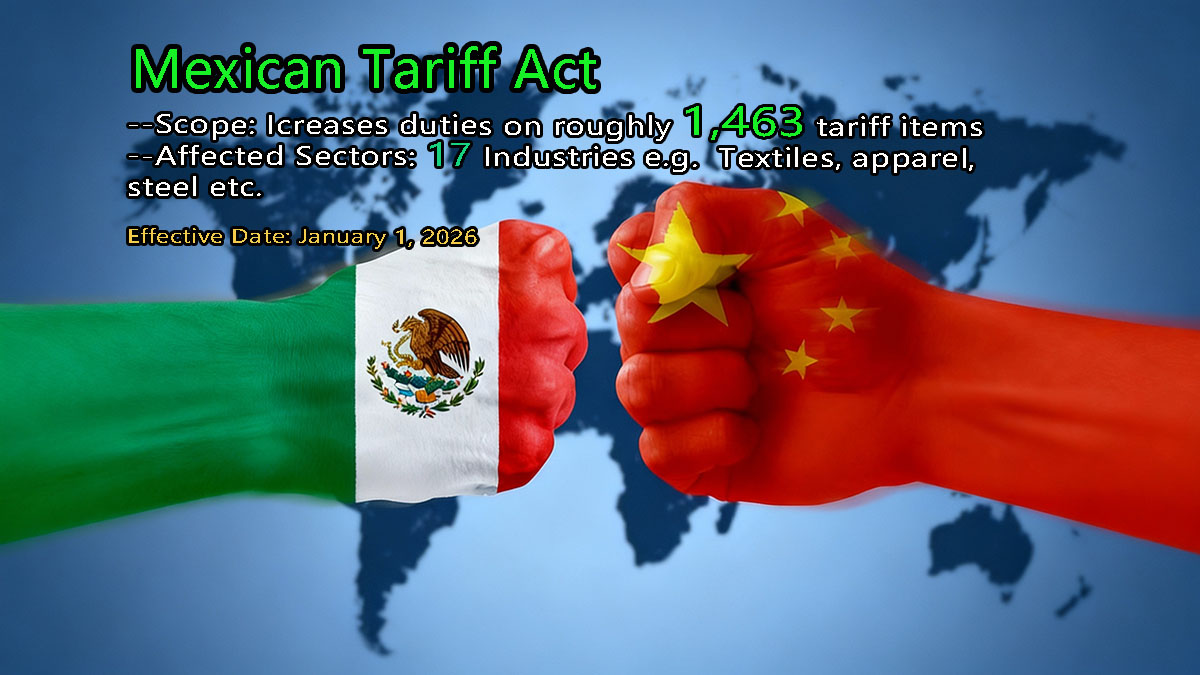
Effective January 1, 2025, Mexico eliminated the duty-free exemption for imported goods valued at less than USD50 (only the United States and Canada will be exempted). All other imported goods will be subject to a 19% comprehensive import tax, which includes value-added tax (VAT). Additionally, goods purchased through cross-border e-commerce platforms will be subject to a 16% VAT deduction, and buyers must provide an RFC tax number or CURP code to complete customs clearance procedures.
2. Enhanced Requirements for Importer Identity and Product Information
All imported goods must now include the recipient's tax identification number (RFC/CURP). Enterprises are required to register for import qualifications, while individuals must submit valid identification documents. Failure to comply may result in customs clearance delays or the return of goods. Furthermore, product descriptions must be detailed and precise. General terms such as "accessories" or "samples" will no longer be accepted and may lead to rejection.
3. Implementation of Anti-Dumping Measures and Regulation of Specific Commodities
Certain goods, including footwear, polyester resin, ceramic tableware, and others, must undergo official declaration and be subject to countervailing duties. Additionally, goods valued at over USD1,000 require formal import registration. The simplified customs declaration process for shipments valued above USD2,500 has been abolished, which may further prolong customs clearance times.
4. Increased Customs Inspection Rates and Compliance Risks
Mexican customs authorities have intensified their scrutiny of intellectual property rights, certificates of origin, and NOM certification (mandatory product standards), with a spot-check rate reaching up to 80%. Non-compliant goods may be temporarily detained or destroyed.
5. Formal Customs Declaration Required for Goods Under HTS Chapter 87
The following goods must be imported through formal customs declaration procedures: auto parts, motor vehicles, tractors, velocipedes (bicycles), motorcycles, wheelchairs, strollers, child seats, and other land vehicles, along with their parts and accessories.
6. Imposition of Countervailing Duties on Specific Goods
The following goods are subject to countervailing duties upon import and must be declared through formal customs procedures: footwear, polyester resin, cut bond paper, short fiber polyester, ceramic tableware, steel cables, steel concrete nails, threaded steel rods, steel grinding balls, stainless steel sinks, aluminum pressure cookers, aluminum cookware, aluminum discs, bottle-type hydraulic jacks, children's bicycles, metallic plastic balloons, metal fasteners, pencils, and plastic spray bottles.
For detailed information on the Mexican government's announcement, please refer to the following link:
//dof.gob.mx/nota_detalle.php?codigo=5746326&fecha=30/12/2024#gsc.tab=0
Analysis of Policy Impact
Increased Cost Pressure: The comprehensive imposition of tariffs and value-added taxes is expected to reduce profit margins for small and medium-sized exporters, particularly those dealing in low-priced goods.
Decline in Logistics Efficiency: Factors such as port strikes, changes in customs personnel, and the implementation of new policies have contributed to extended customs clearance times, with average delays ranging from 5 to 10 days.
Higher Compliance Threshold: Requirements such as NOM certification and RFC tax numbers increase operational costs for businesses. Non-compliant entities may face substantial fines or restrictions on market access.
Recommendations for Enterprise Response Strategies
1. Optimization of Supply Chain and Logistics Strategy
Explore overseas warehousing and bonded import models: Establishing a warehousing center in Mexico or utilizing the A4 bonded import model can help reduce delivery times and tariff costs. Diversify transportation channels: Utilize a combination of sea, air, and cross-border land transportation between the U.S. and Mexico to mitigate risks associated with policy fluctuations in any single channel.
2. Strengthening Compliance Management
Register import qualifications in advance: Ensure that all necessary documentation, including RFC tax numbers and NOM certifications (e.g., for electronics and toys), is in place. Engage professional customs brokers to handle documentation.
Provide accurate declaration information: Ensure that product descriptions match the actual goods. Submit Spanish-language invoices and certificates of origin to avoid customs detention due to inconsistencies.
3. Strategic Tax Planning and Cost Control
Leverage preferential trade agreements: Study the United States-Mexico-Canada Agreement (USMCA) and other Mexican Free Trade Agreements to qualify for reduced tariff rates.
Utilize third-party re-export strategies: Consider re-exporting goods through a third country to avoid anti-dumping duties, while ensuring complete origin documentation to manage traceability risks.
4. Continuous Policy Monitoring and Risk Preparedness
Establish a policy tracking mechanism: Regularly monitor announcements from the Mexican Ministry of Finance (SHCP) and the Tax Administration Service (SAT) to adjust customs clearance strategies accordingly.
Obtain logistics insurance: Coverage for risks such as cargo delays and seizures can help mitigate unexpected financial losses.
Conclusion
The 2025 customs clearance policy updates in Mexico represent a significant step toward trade standardization, but also present new challenges for cross-border enterprises. Success in this evolving regulatory environment will depend on compliance, localization, and flexible strategic planning. It is recommended that businesses collaborate closely with professional logistics service providers, such as Sunny Worldwide Logistics, to leverage their customs clearance expertise and real-time data support, thereby achieving efficient customs processing and cost optimization.
Logistics Trends from China to Mexico in July 2025
Are Trump's tariffs altering Americans' spending habits?
Related blog