Why did Mexico raise the tariffs on automobiles from China and other Asian countries to 50%

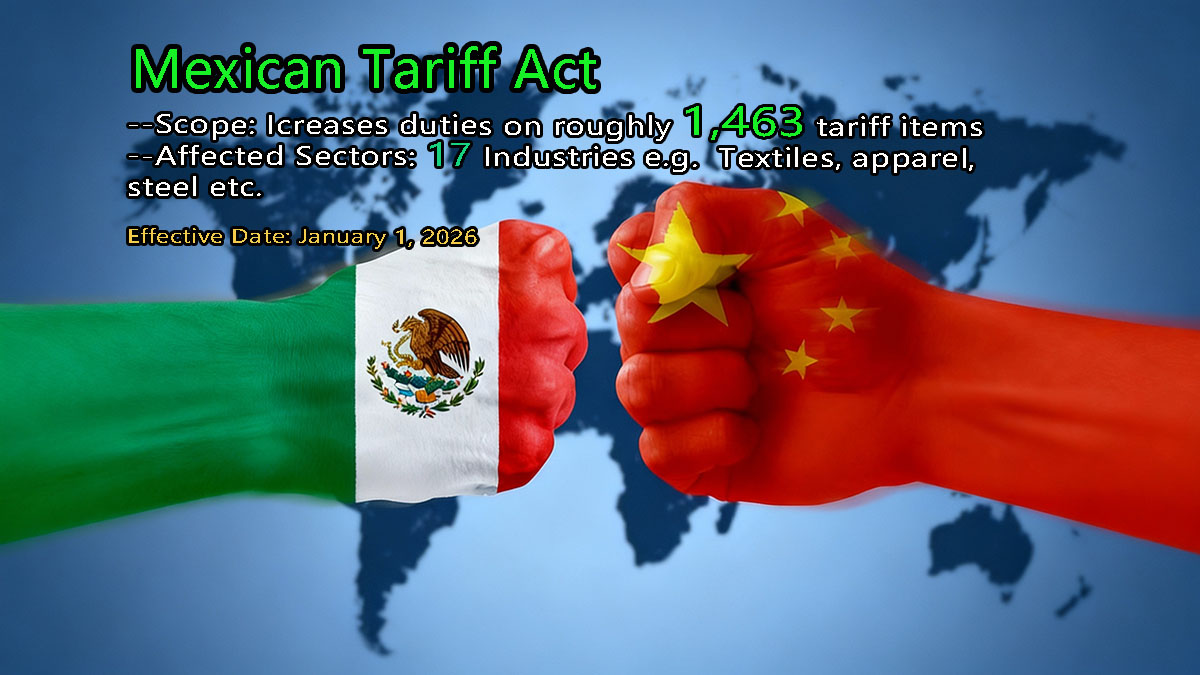
On September 10th, the Mexican government announced that it would carry out a comprehensive reform of import tariffs, raising the tariffs on automobiles from China and other Asian countries to 50%. This decision is intertwined with economic demands to protect domestic industries and geopolitical considerations in response to pressure from the United States.
The recent tariff adjustment by Mexico is mainly based on the following reasons:
1. Protecting domestic industries and jobs
The Mexican government claims that this tariff reform is part of the "Plan Mexico" industrial policy, aiming to protect domestic manufacturing by raising tariffs and save over 325,000 industrial and manufacturing jobs at risk. The Mexican economy minister pointed out that Chinese automobiles enter the Mexican market at a cost "lower than the reference price", making it difficult for local enterprises to compete.
2. Responding to US pressure
This move is driven by strong external pressure. The US is concerned that Chinese goods might enter the North American market through Mexico's "back door", especially in the automotive sector. With the USMCA set for a crucial review in 2026, Mexico's action is seen as a "letter of allegiance" to the US, aiming to secure a favorable position in the negotiations.
3. Increase in fiscal revenue
The new tariffs are expected to bring in approximately 70 billion pesos (about 3.76 billion US dollars) in additional tariff revenue for the Mexican government each year, which is also an important consideration for its fiscal situation.
4. Surge in Chinese auto market share in Mexico
From January to July 2025, Mexico has replaced Russia as the top target market for Chinese auto exports, with an export volume of 322,000 vehicles. The rapid growth of Chinese brands' market share in Mexico has made it feel threatened.
Possible impacts of the policy
Although the tariff adjustment may protect some Mexican industries in the short term, it will also bring a series of challenges
Harming consumer interests and exacerbating inflation
High tariffs will inevitably lead to an increase in the cost of imported cars in Mexico, which will eventually be passed on to consumers and push up prices. For instance, car retail prices in Mexico City have already risen after the announcement of the news.
Weakening Mexico's investment attractiveness
This policy will seriously undermine the certainty of Mexico's business environment and reduce international enterprises' confidence in investing in Mexico. It is reported that several major Chinese enterprises have suspended their investment plans in Mexico.
China's Ministry of Commerce announced on September 25, 2025, that it has initiated a trade and investment barrier investigation into relevant restrictive measures against China by Mexico. The investigation is expected to last for six to nine months, and its outcome may lead to further countermeasures by China.
Mexico's decision to significantly raise tariffs on automobiles represents a difficult balance between the economic demands of protecting its domestic industry and the geopolitical considerations of responding to pressure from the United States. However, such unilateral protectionist measures may not only harm its economic relations with China but also, in the long run, backfire on its own economy due to the negative impacts on consumer costs, inflation, and the investment environment.
At the same time, this tariff decision has had an immediate impact on the logistics industry, mainly focusing on transportation modes, the reshaping of cost structures, and the localization adjustment of supply chain strategies. For instance, the demand for overseas warehouses has surged: as shipping goods from local Mexican warehouses to avoid high tariffs. Accelerating the layout of overseas warehouses in Mexico has become a "safe haven" to avoid tariffs and a key to enhancing local service capabilities.
Mexico suspended tariff increase on 1371 Chinese products
How Mexican importers are responding to tariffs adjustments
Related blog