


LCL Ocean Freight from China to Mexico
Less than Container Load (LCL) Ocean Freight
Cost-effective choice for small and medium-sized enterprises
What is Ocean Freight?
Ocean freight, or Sea freight is a type of transportation that involves shipping goods across oceans and seas using cargo ships or vessels. It is one of the most cost-effective and efficient modes of transportation for moving large volumes of goods over long distances.
The process of ocean freight involves several steps, including booking the shipment, loading the cargo onto the vessel, transporting it across the ocean, unloading the cargo at the destination port, and delivering it to the final destination. The shipment can be either a full container load (FCL) or less than a container load (LCL), depending on the volume of goods transported.
LCL(Less than Container Load) is a mode of sea freight for involvers multiple shippers' items are packed together into a single container. This is the way to go when you're shipping in quantities too small to fill an entire container. This allows for more smaller, more adaptable inventory.
| Regular Shipping Schedule from China to Mexico | ||
| Port of Departure | Port of Destination | Transit Time (Days) |
Shenzhen, Shanghai, Xiamen Tianjin, Qingdao | Manzanillo | 22 |
| Lazaro Cardenas | 24 | |
| Altamira | 45 | |
- All-inclusive fees (including de-vanning charge) with no hidden costs, making it suitable for small and medium-size enterprises with limited budgets.
- Damage Prevention: Fragile items are double-protected with honeycomb cardboard and stretch film, resulting in a damage rate less than 15% of the industry average.
- Spanish labels and FBA barcode printing are provided, meeting the requirements for customs clearance in Mexico and Amazon warehouse entry.
- LCL shipments require waiting for other goods to fill a container, adding 3-5 days to the cargo consolidation time compared to FCL.
- Sea transport to Mexico takes 30-50 days, and customs inspections or adverse weather conditions may cause further delays of 1-2 weeks.
(2). Contingent Risks
- If other goods in the same container have issues (e.g., incorrect documentation), the entire container may be detained. A buffer period of 10-15 days is recommended.
(3). Cargo Volume Limitations
- 15 cubic meters is the tipping point: shipments exceeding this volume are more cost-effective with FCL. Oversized items (e.g., furniture over 3 meters long) require special handling.
- Remote ports have a minimum charge of 2 cubic meters, and very small shipments may experience reduced cost-effectiveness.
III. Who Is Suitable for LCL Ocean Freight?
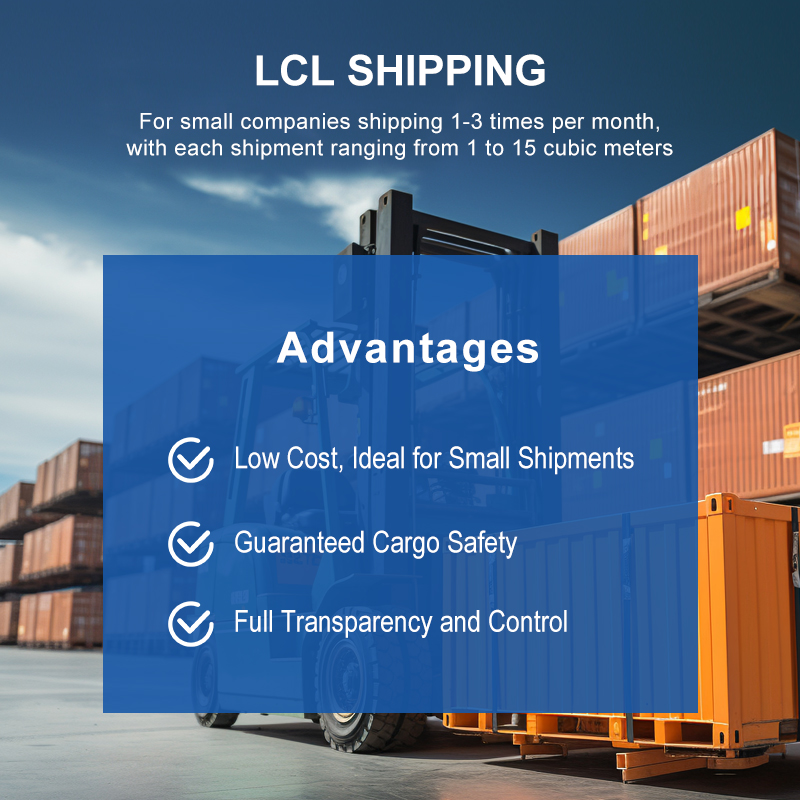
- Small-Batch Exporters: Companies shipping 1-3 times per month, with each shipment ranging from 1 to 15 cubic meters.
- New Market Testers: Businesses looking to reduce initial logistics costs and test overseas market demand for their products.
Suitable Goods:
- Standard Pressure-Resistant Items: Building materials, hardware, assembled furniture, small appliances, daily necessities, etc.
- Regularly Packaged Cargo: Goods packed in cardboard boxes or wooden crates, with dimensions and weights suitable for manual handling and stacking.
Unsuitable Goods:
- Hazardous Materials (require separate confirmation), oversized/heavy items (e.g., large machinery), and urgent orders with high time sensitivity.
- Manzanillo Port: Direct 30-day transit, fast customs clearance, suitable for peak season replenishments.
- Altamira Port: 50-day economical route, ideal for general cargo with low time sensitivity.
Two Preparations to Make in Advance
- Insurance: It is recommended to purchase insurance for shipments valued over USD 5,000 to protect against handling accidents or natural disasters.
- Label Verification: Ensure labels include the product name in Spanish, net/gross weight, and"Made in China"to avoid customs issues.
Cost-Saving Tips
- Consolidate similar goods for shipment (e.g., fixed twice-monthly shipments) to reduce consolidation waiting time.
- When the shipment volume approaches 10 cubic meters, compare the total costs of FCL and LCL (including destination port fees).
Summary