I. What is DDP Shipping?
DDP (Delivered Duty Paid) is one of the international trade terms, which means that the seller undertakes all costs and risks of transporting goods to the destination, including export customs clearance, international transportation, customs clearance in the destination country, payment of tariffs/VAT, and last-mile delivery. The buyer only needs to receive the goods.
DDP is an extension of logistics services, covering customs clearance in both the exporting and importing countries (i.e.,"double clearance") and tax payment on behalf of the client. This service is usually combined with the DDP model to form a"door-to-door all-inclusive"service, suitable for cross-border sellers who are unfamiliar with overseas taxation and regulations.
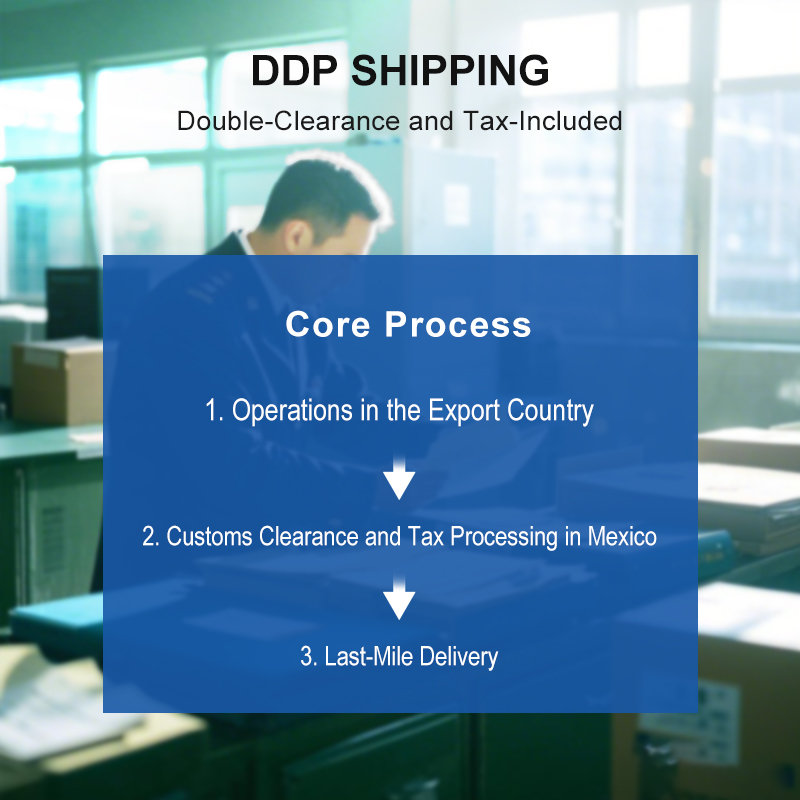
II. Core Process of DDP Services
1. Operations in the Export Country
- Pickup and Domestic Customs Clearance: The logistics provider picks up goods from the factory/warehouse and completes the export customs clearance in China (requiring documents such as packing lists, invoices, and contracts).
- International Transportation: The logistics provider selects the mode of transportation (sea, air, or rail) based on the volume of goods and locks in the total cost according to the DDP terms.
2. Customs Clearance and Tax Processing in Mexico
- Pre-Review of Customs Documents:
- Verify HS codes (e.g., for apparel, confirm the NOM-004-SSA3-2018 labeling standards);
- Submit documents such as a Spanish commercial invoice, bill of lading, and certificate of origin.
- Tax Payment on Behalf of the Client: The logistics provider pays the import duties (Duty) and value-added tax (IVA) on behalf of the client. The tax rate is determined based on the value of the goods and the HS code.
3. Last-Mile Delivery
- After customs clearance, a local Mexican logistics provider completes the unloading, deconsolidation, and delivery of the goods, and returns the signed receipt to the seller.
III. Key Links and Solutions in Mexican Customs Clearance
1. HS Code Classification
- Challenges: Mexico's HS codes are detailed up to 8-10 digits. Incorrect classification may lead to tax discrepancies or cargo detention (e.g., furniture requires corresponding NOM certification codes).
- Solutions: Professional customs officers pre-review the goods, matching tax codes based on material and purpose. For some categories, pre-application for certification is required.
2. Tax Declaration Optimization- Declared Value: It is generally recommended to declare 60%-70% of the FOB price, consistent with the purchase invoice to avoid customs' suspicion of under-declaration.
- Composite Tax Rate: This includes tariffs (0%-30%, depending on the category) + value-added tax (16%). Some products may be eligible for preferential rates (e.g., under free trade agreements for electromechanical products).
3. Customs Inspection Response
- Common Reasons for Inspection: Abnormal declared value, incomplete documents, and sensitive categories (e.g., electronics, children's products).
- Controversy Resolution: Local customs agents accompany inspections, and lawyers intervene in disputed cases to appeal, requiring additional evidence such as third-party inspection reports.
IV. Cost Composition and Risk Control
1. Cost Components
- Basic Freight: Charged based on the mode of transportation (sea/air) and volume of goods;
- Fixed Customs Clearance Fee:Includes document processing and customs agent service fees;
- Destination Country Taxes: Tariffs + value-added tax (calculated based on declared value) + customs miscellaneous fees (such as inspection fees, late payment penalties).
2. Cost Optimization
- Tax Rate Optimization: Reduce tariffs through HS code classification and free trade agreements (e.g., USMCA);
- Avoidance of Hidden Costs: Predict the probability of inspection and ensure compliant declarations to avoid fines (Mexican customs fines can reach up to 100% of the cargo value).
V. Applicable Scenarios and Precautions
1. Suitable Seller Types
- Small and Medium Cross-Border Enterprises:** Those without overseas companies or tax agents, seeking to simplify processes;
- High-Compliance Categories: Such as food contact products, children's products, and medical devices that require mandatory certification.
2. Precautions
- Document Authenticity: Information on commercial invoices and certificates of origin must match the actual goods. Mexican customs strictly checks for"document-goods discrepancies";
- Certification Compliance: Confirm in advance whether the products meet NOM standards (e.g., NOM-001-SCFI-2018 for electronics);
- Logistics Provider Qualifications: Choose a supplier with a Mexican RFC tax number (tax agent qualification) and a local customs team.
VI. Summary of the Value of DDP and Double-Clearance and Tax-Inclusive Services
DDP Services integrate logistics, customs clearance, and tax processes, transferring the complexity of cross-border operations to the service provider. This service is especially suitable for companies unfamiliar with the Mexican market. Its core value lies in risk controllability (compliant declarations reduce the risk of penalties and confiscation) and cost certainty (all-inclusive pricing avoids tax fluctuations). However, sellers must strictly review the compliance of their goods to avoid chain failures due to product qualification issues. For companies planning long-term operations in the Mexican market, it is recommended to gradually transition from DDP to independent customs clearance to further optimize costs.